Pickleball tips
Coach Mo · Pickleball coach in San Jose, California
On the joy of teaching, the beauty of being a beginner, and a full-circle Saturday I'll never forget.
This past Saturday, I had the privilege of hosting my Road to 3.0 beginner pickleball clinic at Almaden Valley Athletic Club (AVAC).
We worked on fundamentals. We talked about the kitchen, footwork, paddle positioning, and why the softest shot in pickleball is sometimes the smartest one.
There were missed shots, plenty of laughs, little breakthroughs, and those beautiful moments when something that seemed impossible 20 minutes earlier suddenly started to click.
But the best part of my day had very little to do with pickleball.
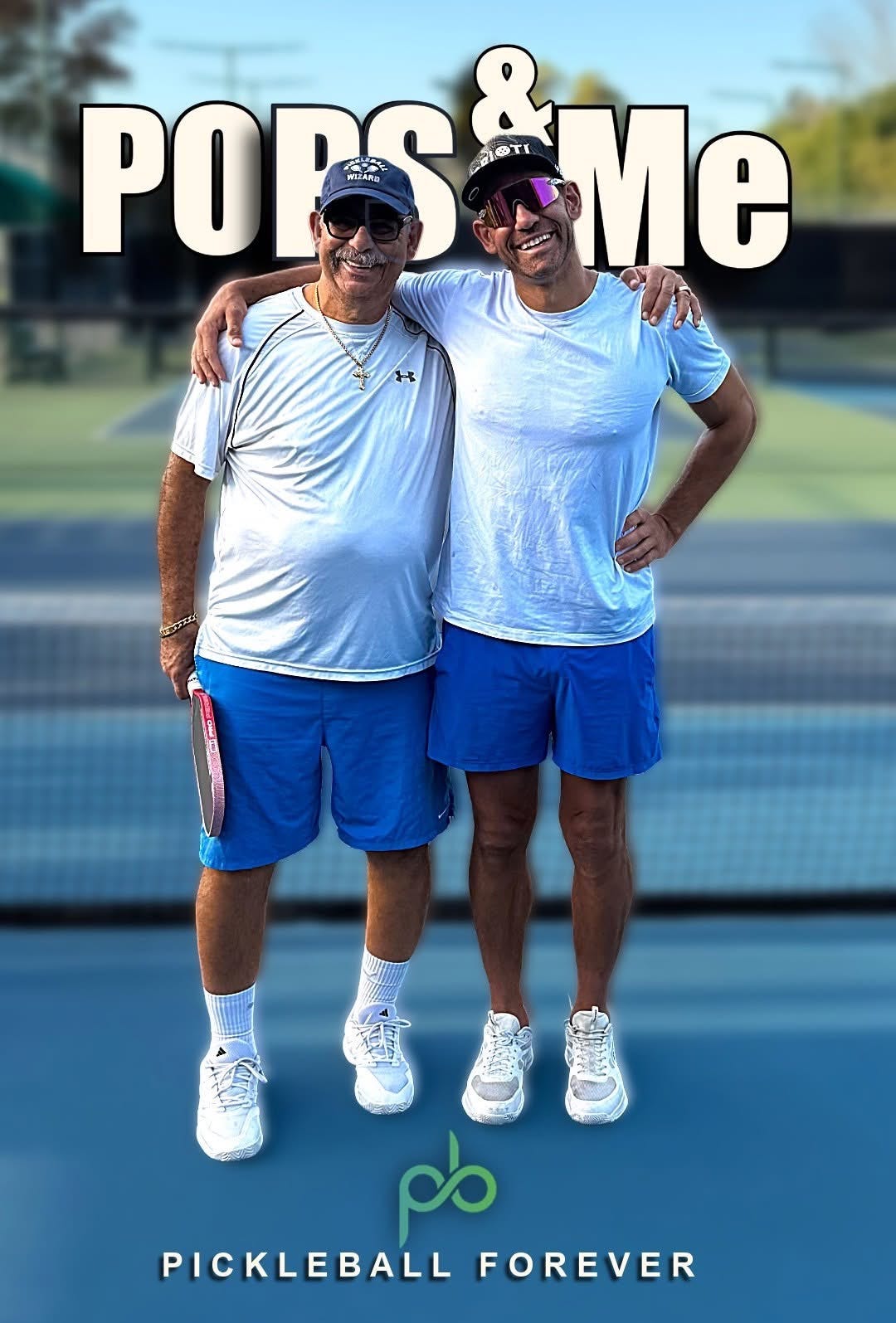
My dad was there. Coaching alongside me.
My first teacher. My best friend. The man who taught me so much of what I know.
And now, all these years later, my assistant coach.
Funny how life works.
The Teacher Becomes the Student. Then the Student Becomes the Teacher.
Growing up, my dad was the one teaching me.
Not just about sports, but about patience, discipline, effort, and showing up even when things don't come easily.
He taught me that improvement takes repetition. That you don't have to get everything right the first time. That the way you carry yourself matters just as much as the result.
I probably didn't appreciate all those lessons at the time.
Most of us don't.
We grow up, get busy, develop our own interests, and eventually start believing we've figured a few things out on our own.
Then one Saturday afternoon, you look across a pickleball court and see your dad standing there helping you teach something you love.
And you realize just how much of what you're passing along came from him in the first place.
I may have been leading the clinic, but the original instructor was standing right beside me.
Full circle.
The Joy of Teaching Is Watching Someone Believe They Can.
There's something special about teaching beginners.
Advanced players often want to know how to hit harder, move faster, or win more.
Beginners ask wonderfully simple questions.
Why do we have a kitchen?
Where should I stand?
Why does my ball keep going into the net?
Am I holding the paddle right?
And my personal favorite, in one form or another:
Why does this look so much easier when you do it?
Fair question.
But these questions are a reminder that none of us arrived on the court knowing what we know today.
Every confident player was once a beginner.
Every beautiful third-shot drop was preceded by countless ugly ones.
Every good player has donated a truly impressive number of balls to the net.
I certainly have.
The real reward of coaching isn't demonstrating what I can do.
It's watching someone discover what they can do.
The first clean dink. The first controlled volley. The moment a player stops swinging for the fences and starts understanding the point.
That little smile when it clicks?
That's the good stuff.
Five Lessons From the Court (That Apply Pretty Much Everywhere)
One thing I've learned through coaching is that the fundamentals of pickleball have a funny way of becoming lessons about life.
Here are five ideas we emphasized at the clinic that are worth remembering, whether you're brand-new or have been playing for years.
A rushed swing rarely fixes a difficult shot. Often, the answer is less movement, better positioning, and more control.
Life has a way of rewarding that same approach.
We talked about having an athletic stance, keeping the paddle out front, and staying balanced.
Preparation matters. But so does being relaxed enough to respond to whatever comes next.
Sometimes the smartest play is a soft reset, a patient dink, or simply keeping the ball in play.
Not every moment requires a spectacular finish.
Hit a ball into the net? Great. Now we have something to learn from.
One missed shot doesn't make you a bad player, any more than one bad day makes you a failure.
Maybe today you learned how to hold the paddle with a softer grip.
Maybe you finally understood why getting to the kitchen matters.
Maybe you simply felt a little more comfortable on the court.
That counts.
Especially that.
Patience Is a Coaching Skill. And a Life Skill.
One of the things I emphasize most when teaching is patience.
Not the passive kind where you stand around hoping things get better.
The active kind.
The patience to practice the same movement again. To listen. To make a small adjustment. To trust that improvement is happening even when it isn't immediately obvious.
It's easy to forget how intimidating learning something new can be.
You don't know the terminology. You don't know where to stand. You're worried about holding everyone else up or looking silly.
A good coach should remember what that feels like.
Because the goal isn't to overwhelm someone with everything you know.
The goal is to give them just enough to believe they can learn the next thing.
That's why I love teaching.
You're not just helping someone hit a pickleball.
You're helping them build confidence, develop a skill, find a community, and hopefully discover something they'll enjoy for years.
And sometimes, you're reminding yourself why you fell in love with the game in the first place.
The Part I'll Remember Most
At the end of the day, I'll remember the players, the conversations, the laughter, and the little breakthroughs.
I'm grateful to everyone who came out, trusted me with their time, and showed up willing to learn.
I'm grateful to AVAC for the opportunity to share this game with more people.
But years from now, I suspect the clearest memory won't be a particular drill or shot.
It'll be my dad.
Standing beside me.
Helping me teach.
The same man who spent so much of his life teaching me.
It's easy to get caught up in building something. The next clinic. The next lesson. The next opportunity. The next milestone.
Sometimes, though, the milestone is right there in front of you, and it doesn't look like an accomplishment on paper.
Sometimes it looks like getting to spend a Saturday afternoon doing something you love with the person who helped make you who you are.
I don't take that for granted.
And if there's one thing I hope the players took away from our clinic, it's this:
You don't have to be great at something to find joy in it. You just have to be willing to begin.
The rest comes with patience, practice, and a few people who believe in you along the way.
I was fortunate enough to have one of those people beside me on Saturday.
And he's been there since day one.
Thanks, Dad.
For being my first teacher, my best friend, and now, apparently, my assistant coach.
Although we may have to renegotiate that job title.
Love you, Pops.
Better Every Day.
— Coach Mo
Pickleball Forever ♾️
To everyone who joined our Road to 3.0 clinic: Thank you for showing up, working hard, and bringing such great energy. Keep practicing, stay patient with yourself, and remember that progress isn't always measured by points on a scoreboard.
If you're beginning your pickleball journey or looking to build confidence on the court, I'd love to help. You can explore lessons, clinics, and the Pickleball Forever Playbook at pickleballforever.co
https://pickleballforever.substack.com/p/my-first-teacher-my-assistant-coach
About the coach
Coach Mo
Pickleball coach in San Jose, California
Booking 1:1 lessons in the San Jose / Bay Area: Rengstorff Park, Cataldi Park, Cupertino Memorial Park, and West Valley College. PPR-trained instructor with 3 years teaching beginners and intermediates — fundamentals, positioning, shot selection, movement, consistency, and match strategy, tailored to your game and goals.
Book a pickleball lesson with CoachReady to put it into practice?
Book a pickleball lesson with Coach in San Jose, California and get coaching built around your game.
Book a lesson with CoachGet Started
Contact Coach to ask about upcoming lessons and programs.
Where Coach Teaches
© 2026 Coach Mo. All rights reserved.