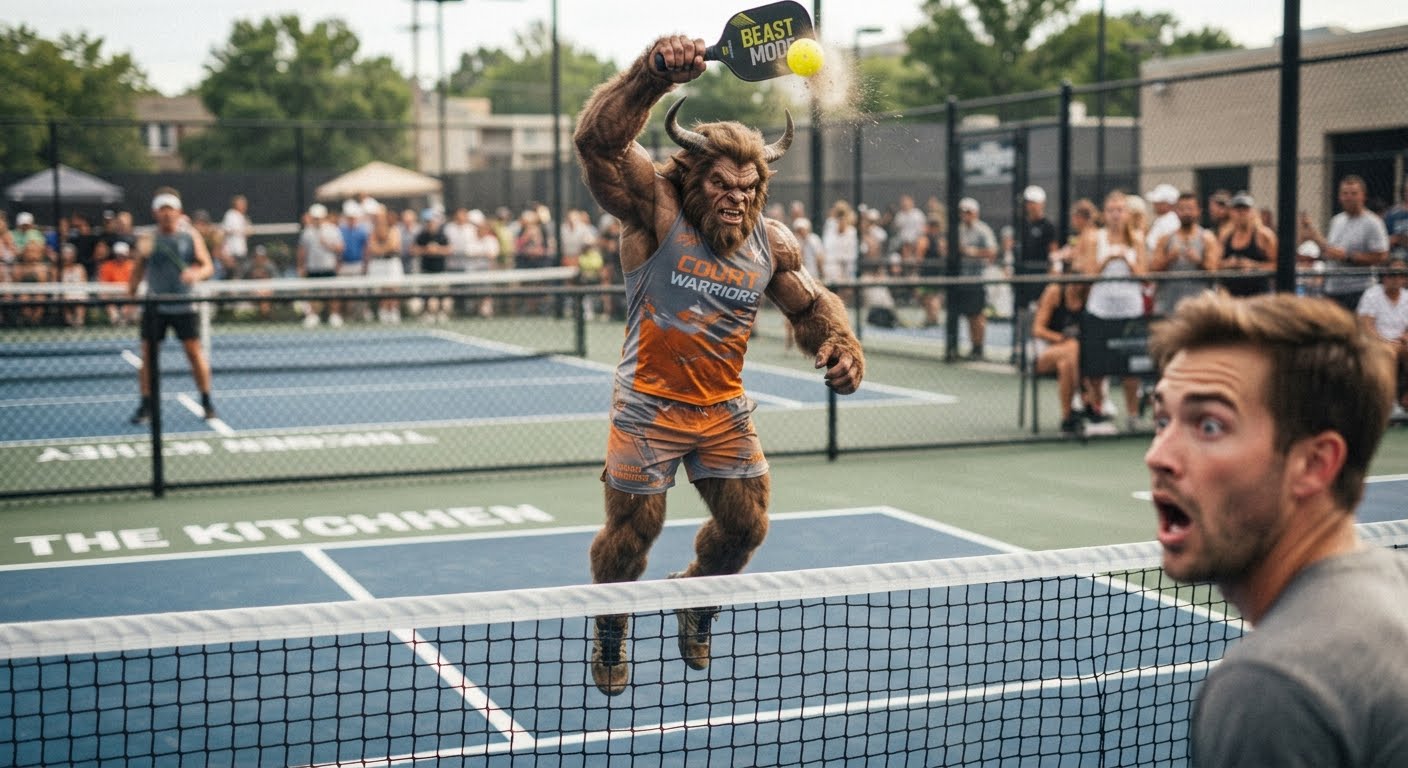
If you want to know how to handle bangers in pickleball, start by taking time away from their drive and giving them nothing to feed on. That means soft hands, compact blocks, and patient resets into the kitchen so you force the rally on your terms. I’m Russ Lombardo, a PCI-certified pickleball coach in Cary, and I teach my students to turn heavy pace into easy, high-percentage shots with a calm plan and a few reliable habits.
What Counts As A “Banger,” And Why Do They Give You Trouble?
A banger is a player who drives most balls hard and low, trying to force errors and pop-ups. They love anything shoulder-high or above, and they thrive on rushed footwork, late contact, and big backswings they can target. If you are reacting instead of reading, their pace will eventually win. The solution is not to outhit them. It is to remove their favorite shot, take away their timing, and win the next ball by forcing them to hit up.
In Cary, I see this style a lot at McCrimmon Parkway Neighborhood Park where rec play can be fast and friendly. You do not need special hands to manage it. You need a repeatable plan.
Your Anti-Banger Game Plan: Calm First Contact, Then Neutralize
I coach a three-step approach that works for beginners learning control and for experienced players who want to turn defense into offense.
Win the first contact: If they serve hard, return deep, high-percentage, and crosscourt. If they drive your return, block with a quiet paddle face and zero backswing. Think stop sign, not windshield wiper. Keep the ball out in front of your lead knee with a slightly open face.
Reset to neutral: After you block the drive, aim a soft ball into the kitchen, preferably to their backhand or into the middle seam. This reset steals their favorite pace and buys you time to move in.
Take position before you take risk: Once you are at the non-volley zone, make them lift the ball. Then choose your moment to press with a well-timed counter or a roll volley into their feet..
The Block: Your Most Valuable Shot Against Pace
Most players try to swing at drives because it feels proactive. Against a banger, your best offense is a great block.
Stance and timing: Split step as they start their swing. Stay balanced so the ball meets a stable paddle, not falling feet.
Paddle path: Freeze your elbow near your ribcage. Present a square, slightly open face. Let the ball compress and rebound. No backswing. Minimal follow-through.
Target: Middle of the kitchen at net height or slightly lower. Middle targets minimize angle errors and make them hit up on the next ball.
Contact point: In front of your body. Late contact pops the ball up. Early contact keeps it down.
A few minutes of focused block reps turns screaming drives into easy slow-bouncers.
Reset Mastery: Land Soft And Give Them Nothing
About the coach
RL
Russ Lombardo
Pickleball coach in Cary, NC
Helping new and experienced players learn and improve your game, focused on the Cary, NC area, including Durham, Raleigh, Apex, Morrisvillle
I help pickleball beginners build confidence and learn the game, while helping experienced players sharpen their skills, strategy, and consistency. Whether you're picking up a paddle for the first time or working toward a stronger all-around game, I create personalized lessons around your goals. In Cary, North Carolina, and nearby communities, I coach with a relaxed, welcoming approach that keeps learning productive and enjoyable. I am a PCI-certified Pickleball coach with five years of coaching experience. We can work on grips, serves, returns, dinks, court positioning, shot placement, resets, and handling different styles of play. Each lesson combines targeted drills with gameplay, so you can practice skills in action. As a Selkirk Advocate, I can provide paddles to demo and help you find a good fit. With a 5.0 rating from 113 reviews and 156 completed lessons, I would love to help you enjoy Pickleball and play with greater confidence. Book a lesson and let's get started.
If your block buys time, your reset buys position. The reset is a quiet, upward brush that lands in the kitchen and dies.
Grip pressure: 3 out of 10, then firm up at impact. Soft hands absorb pace, hard hands send the ball long.
Face angle: Slightly open, so the ball climbs gently over the net and drops.
Footwork: Slide behind the bounce, set your feet, then lift. Moving through contact turns resets into pop-ups.
Vision: Watch the ball to the paddle. Do not peek. Peeking is the number one cause of resets that sail.
On windy days, aim your resets higher over the net with a bit more arc into the middle. Indoors, be brave aiming lower because there is no wind. These small adjustments make your resets predictable in different local conditions.
Smart Positioning: Earn Your Counter Instead Of Chasing It
Great counters happen before the swing.
Line of defense: When you see a big backswing, hold a slightly deeper ready position at the non-volley zone. A half-step back gives you space to block a body-line drive.
Middle first: Cover the middle seam with your paddle face square to the net. Bangers love aiming between partners.
Feet quiet, eyes quick: Split step on their hit. If you are still walking when the ball arrives, your hands will be late.
Play to their weaker hip: Most bangers hate half-volleys into their body. Block middle chest-high and watch errors pile up.
Once they float one, that is your green light to counter with a compact roll to their backhand or a deep push volley to the back corner.
Countering Drives Without Over-Swinging
You can counter without muscling the ball.
Compact roll: Start with a short backswing below the ball, brush up through contact, and aim to the backhand hip. Use your legs to drive, not your shoulder.
Flat punch: If the ball is high and in front, punch through the middle with a firm wrist. No windup, just a straight-line push.
Change the lane: Counter crosscourt against an opposite-handed banger to force a longer recovery. Or go middle to create hesitation.
Your goal is not to hit a winner every time. It is to force a neutral or defensive reply that you or your partner can finish.
Serve And Return Choices That Starve The Banger
Serves and returns are your first chance to take away the drive.
Serve: Add a heavy, deep serve that pushes them behind the baseline. More depth equals less angle on their next ball. Do not overhit. Placement beats pace.
Return: Prioritize depth over spin. Crosscourt to their backhand if available. Float the return higher if you need to buy extra time to the kitchen.
Third and fifth: If they are driving third balls, expect it. Meet the ball early with a block or a short catch-and-lift reset. If they drop instead, be ready to hold the line and volley down to their feet.
Drills to Tame Bangers Fast
.
Wall block ladder: Stand 8 to 12 feet from a wall. Light toss to yourself, then block to a chalked rectangle the size of the kitchen. Ten in a row without a pop-up.
Body-line block: Partner stands at the baseline driving to your chest. You hold a quiet paddle face and drop each ball into the kitchen. Switch after 10.
Reset ladder: Start at the transition zone. Your partner drives to you, you reset to the kitchen. If you land it, take one step forward. If you pop it, take one step back. Reach the non-volley zone in five balls.
Counter window: At the non-volley zone, your partner feeds firm, shoulder-high balls. You roll counters to a taped 2-foot “backhand hip” lane. Five reps forehand and five backhand without over-swing.
Middle-then-corner pattern: After a neutral block, aim one reset to the middle, then the next to the deep corner. This teaches you to move the banger off the center line.
What If You Come From Tennis And Get Sucked Into Speed?
Many new players are strong tennis hitters. The instinct is to meet pace with pace. We channel those strengths without leaking errors.
Smaller swings: Your topspin drive will still exist, just shorten it. Think table tennis roll, not forehand winner.
Softer grip, later firmness: Tennis players often hold a 7 out of 10. Try a 3 at the start and firm to a 5 at contact.
Volley shape: Replace the punchy tennis volley with a catch-and-lift reset. That single swap can cut pop-ups in half.
Two-Person Antidote: Partner Roles Against A Banger
Doubles defense is teamwork.
Clear lanes: The inside player owns middle blocks. The outside player shades line and looks to pounce on floaters.
Talk early: Call “middle” or “line” before contact, not after. Early calls settle your partner’s hands.
Patience pays: Do not both counterattack at once. One stabilizes with a block, the other hunts for the next high ball.
When Should You Drive Back At A Banger?
You do not need to be passive. You just need the right ball.
Drive when it is above net height and in front of you.
Drive into their feet or at the hitting shoulder to jam their swing.
Drive after a quality reset that forced them to move or stretch.
If none of those are true, keep feeding the kitchen until they give you a green light. Hunting winners too early often restarts their favorite rally pattern.
Common Mistakes, And Quick Fixes
Over-swinging blocks: If your blocks sail, film from the side. You will likely see a hidden backswing. Replace with a freeze-and-rebound move.
Late contact: If you are getting jammed, start your split step earlier. Count “hit-split” in your head as they swing.
Aiming too close to lines: Middle solves most problems. Save corners for counters and finishes.
Rushing the kitchen: If you sprint forward on returns and eat a drive at your shoelaces, pause at the transition zone and reset first. Then continue in.
How I Coach Anti-Banger Skills In Lessons
I bring a relaxed, welcoming energy to every session so you can experiment without tension. We start by identifying what gives you the most trouble: chest-high drives, footwork in transition, or resets that float. Then we run targeted drills with immediate feedback and finish with game play so you put the new patterns into action.
I am a PCI-certified pickleball coach with five years of coaching experience in Cary and nearby communities. My lessons combine practical technique with strategy you can remember when the ball starts moving fast. I also provide Selkirk demo paddles if you want to test different feels while we dial in soft hands and stability.
I am grateful for a 5-star average across 114 reviews and 157 completed lessons. Students often tell me these anti-banger tools make rec play more enjoyable because you feel in control again.
Should You Change Paddles To Handle Bangers?
Paddle choice matters less than your hands, but there are tradeoffs.
Softer feel helps resets: A slightly softer face can make it easier to absorb pace.
Stability helps blocks: A balanced or slightly head-light paddle reduces twisting on body-line hits.
Control over raw power: If you already pop balls up, a highly powerful setup will magnify the miss.
As a Selkirk Advocate, I can bring demos to your lesson so you can feel the difference as we practice blocks and resets. But if you already have a paddle you like, we can work with that.
FAQ
What do private anti-banger pickleball lessons cost in Cary with Russ?
My current rate for a single 60-minute lesson is $60. The lessons include targeted drills and gameplay, and they are a great way to build consistency.
Where do you coach anti-banger drills around Cary?
I coach at several Cary-area locations, including Carpenter Park, Ed Yerha Park, McCrimmon Parkway Neighborhood Park, and Apex Community Park. Other nearby options include Apex Nature Park and Morrisville Community Park.
How long does it usually take to feel more confident against bangers?
Most players feel a difference in one or two focused sessions once we clean up the block and reset. Real confidence builds with a couple of weeks of short, consistent practice. The key is repeating a few simple reps until your hands stay calm when the ball speeds up.
Do you work with doubles partners who struggle against power hitters?
Yes. Partner sessions are terrific for practicing seam coverage, middle calls, and coordinated counterattacks. We set roles, drill the middle-first habit, and then scrimmage so your communication and court positioning become second nature.
Can beginners learn these anti-banger skills, or is this only for advanced players?
Beginners can absolutely learn them. We start with soft hands and kitchen targets, then layer in footwork and counters as you are ready. The goal is to feel in control and have fun while building a dependable plan against pace.
Ready to take the pace out of your opponent’s hands and put the point back on your terms? Book a lesson and let’s get to work at a court that is convenient for you.