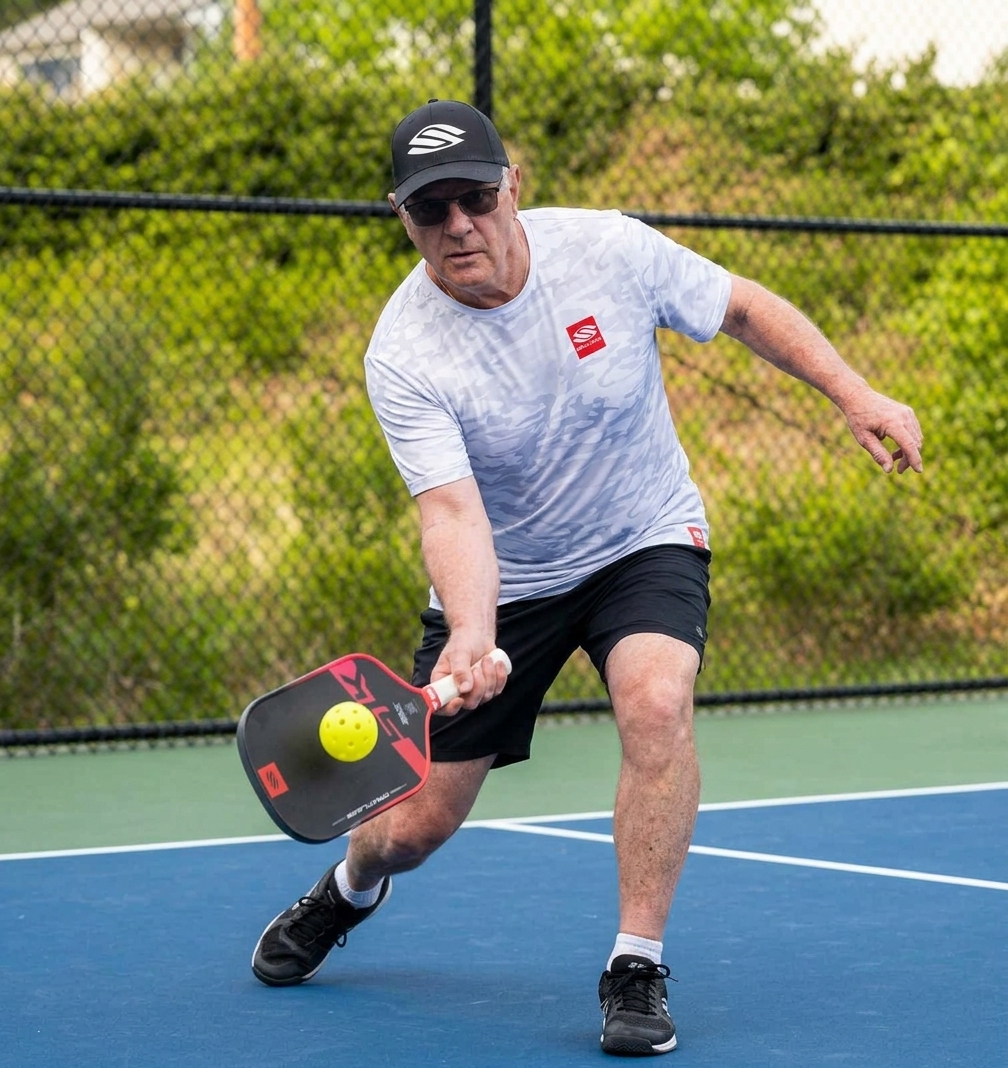
If you want a higher hold rate on your service games, start by improving your Pickleball Return of Serve. I am Russ Lombardo, and here are the Pickleball Return of Serve tips Cary area players ask me for the most: get the ball deep, favor the opponent’s backhand, use controlled footwork, and move forward to the kitchen with a purpose.
These are simple ideas, but they change matches in Cary, Apex, and Morrisville. Below I will show you how I teach them on local courts like Carpenter Park, Ed Yerha Park, McCrimmon Parkway Neighborhood Park, and the NetSports Indoor Facility.
Why your return sets the tone in play
The return is your first chance to neutralize the serving team’s advantage. A deep, high-percentage return buys your team time to get to the Non-Volley Zone line, where most points are won. I coach my students to think of the return like a long approach shot: it is not about power, it is about placement, height, and the footwork that follows.
Pace alone can often backfire. Outdoor courts are lively in the summer heat, so a flat, hard return tends to sit up. I prefer a slightly arcing ball that lands within a paddle length of the baseline. This depth keeps the serving team back on their third shot, making their drop harder and giving you time to establish strong NVZ positioning.
What is the best target for returns?
Your highest percentage target is deep and toward the opponent’s backhand corner. If both opponents are right-handed, send your return deep to the left side of the court. That ball is tougher to attack, and many players will float their third shot from that wing.
When I coach, I will set a cone three feet inside the baseline near the backhand sideline. We will groove 20 balls in a row that land near that cone with medium height. The goal is not perfect accuracy; it is a tight distribution that reliably pins the server back.
Adjust for matchups:
If the server has a shaky forehand, test it early with depth, then return to it until they prove they can handle it.
If the server likes to drive their third, aim your return higher and a bit deeper down the middle. The longer contact point makes their drive less comfortable.
Against lefty-righty teams, return to the deeper backhand and avoid feeding the player who is already crowding the middle.
Footwork you can repeat under pressure
A consistent return starts with simple footwork. Here is the progression I use with my students at local courts such as Carpenter Park and Ed Yerha Park:
Split step as the server makes contact. Think light feet, heels off the ground.
Crossover or shuffle to the ball without backpedaling. If the serve pushes you deep, turn your hips and run through the bounce so you are moving into the shot.
Load on the outside leg, then swing through and step into the court. Your momentum should carry you forward, not sideways.
About the coach
RL
Russ Lombardo
Pickleball coach in Cary, NC
Helping new and experienced players learn and improve your game, focused on the Cary, NC area, including Durham, Raleigh, Apex, Morrisvillle
I help pickleball beginners build confidence and learn the game, while helping experienced players sharpen their skills, strategy, and consistency. Whether you're picking up a paddle for the first time or working toward a stronger all-around game, I create personalized lessons around your goals. In Cary, North Carolina, and nearby communities, I coach with a relaxed, welcoming approach that keeps learning productive and enjoyable. I am a PCI-certified Pickleball coach with five years of coaching experience. We can work on grips, serves, returns, dinks, court positioning, shot placement, resets, and handling different styles of play. Each lesson combines targeted drills with gameplay, so you can practice skills in action. As a Selkirk Advocate, I can provide paddles to demo and help you find a good fit. With a 5.0 rating from 113 reviews and 156 completed lessons, I would love to help you enjoy Pickleball and play with greater confidence. Book a lesson and let's get started.
Immediately transition up the middle toward the NVZ line. Your partner should mirror you. Don't just stand back admiring your shot.
Two checkpoints that fix most misses:
Contact in front of your hip, not beside your body.
Head still and low through contact. If your eyes chase the target too early, depth disappears.
Depth beats pace: how deep is deep enough?
Deep means the second bounce would hit the fence if there were no baseline. Practically, I coach a landing zone two to five feet from the baseline. You can land the ball a foot closer because the bounce is true and the wind may not be a factor. Outdoors in the Cary area, give yourself an extra foot of margin to account for breeze and hotter ball speeds.
A simple depth ladder I use:
Bronze zone: 5-7 feet inside the baseline. Safe but gives up court.
Silver zone: 3-5 feet inside the baseline. Good depth that pressures third shots.
Gold zone: 0-3 feet inside the baseline. Match changers, especially crosscourt to the backhand.
Most students start in silver and visit gold a few times per game. Aim silver as your average, and take gold when the serve is short or slow.
Handling big serves and wind
Cary-area afternoons can be breezy, and some servers can really move the ball. Here is how I simplify returns in those conditions:
Use more spin, not more swing. A compact slice or heavy topspin gives you stability against pace and wind. I like a continental grip for slice and an eastern backhand grip for firm topspin.
Give yourself more net clearance. Add a ball or two of height. Depth plus height beats a flat laser that clips the tape.
Back up a step on heavy serves. Let the ball slow down, then move forward through contact. Your feet become your timing tool.
Shorten your follow-through. Finish with the paddle in front of your chest. Control first, then placement.
Sometimes you'll be faced with wind that often runs crosscourt. If it blows left to right, hit your crosscourt returns higher with a touch of top or sidespin. Into the wind, swing a little more. With the wind, focus on a firmer, shorter stroke and aim a yard higher.
Chip, slice, or roll: choose the right return
You do not need a fancy repertoire. You need two shapes you trust and one changeup.
Neutral slice: A firm, slightly open face, contact in front. Great depth with minimal swing. Ideal on fast or deep serves.
Topspin roll: A short backswing, lift from legs and shoulder, finish high. Use it when the serve sits up or when you want the ball to kick at the opponent’s backhand.
Block-bunt: Minimal swing, just meet the ball and guide it deep. Emergency tool for big servers.
Common mistake: over-slicing so the ball floats. Keep the slice compact and through the court. If your slice is hanging, close the face a few degrees and drive more forward than up.
Doubles communication on the return team
Great returns are wasted if partners hesitate. A few rules my students use:
Returner calls “You” or “Me” before the third shot crosses the service line. Early, loud, and confident.
Partner shades middle when the return pins the server deep. Expect a drive, be ready to block and drop short.
If the return is short, both players brace for speed. Soft hands, compact blocks, then reset.
I also coach a simple poach signal on the return team. If you hit a deep return down the line and see the third shot floating, your partner can step across and take the next ball out of the air to finish or reset. Practice this at half speed first, then build trust.
Drills I use at various courts
You can build a reliable return in 15 minutes if you train with purpose. Here are four drills I often run:
Depth ladder to cones
Place cones 5, 3, and 1 foot from the baseline. Hit five returns to each cone area crosscourt. Score one point for silver, two for gold. Goal: 12 points in 15 balls.
Slice repeat under pressure
Partner serves medium pace. You slice crosscourt and must reach the NVZ line before the third shot lands. If you land silver or better and reach the line, you win the rep. First to 10.
Roll to the backhand, then crash
Short serve to your forehand, roll topspin to the backhand corner, sprint to the kitchen, and play out the point starting with a blocked drive. Focus on forward momentum.
Wind lanes
On breezy days, set wide targets. With crosswind, start your return outside the sideline so the ball drifts back. Ten balls on each side learning the curve.
If you prefer indoor reps, we will swap the wind drill for a pace-control ladder, increasing the server’s speed every five balls.
What return mistakes cost players the most?
Short, flat returns that land in the bronze zone. These invite a drive and put you on your heels.
Watching your returned ball instead of moving. Your feet should start forward as your paddle finishes.
Fancy targets early in rallies. Hit the deep corner first, find angles later.
Hitting to the stronger opponent because they look busy at the middle. Scout during warm-up and test both backhands.
How can I learn returns in private lessons around the Cary area
My coaching style is relaxed and welcoming, which helps players take in feedback and experiment without pressure. We combine targeted drills with live play so you can feel the difference immediately.
If you want focused help, I offer private sessions at Carpenter Park, Ed Yerha Park, McCrimmon Parkway Neighborhood Park, and NetSports, plus nearby Apex Nature Park, Piney Wood and Bethesda in Durham, and Morrisville Community Park. We will identify your biggest return leak, then build a two-shot plan: a dependable crosscourt and a line changeup. Many of my students report quick gains.
I am PCI-certified and have five years of coaching experience. I keep things positive and practical so you leave with two or three habits you can repeat tomorrow. If return of serve accuracy or pressure bothers you, we will also work on your defensive block after the return so you feel safe against hard third shots.
Indoor vs outdoor: Should my return change when Indoors?
Indoors, the bounce is cleaner and there is no wind. You can aim at smaller targets and take the ball earlier. I still prefer a medium-height ball that lands silver or gold. The big change is footwork tempo. You can move sooner and reach the NVZ line a beat earlier because you are not timing gusts or glare.
Outdoors, play a bigger margin game. If the sun is low, position a yard to the side before the serve so you are not looking directly into it at contact.
A simple pre-point routine for better returns
Use this 10-second routine between serves:
Scan: Where are the opponents standing, and who is serving? Any tells?
Decide: Backhand corner or middle deep. Pick one.
Breathe: Two calm breaths. Soften the hands.
Split: As the server contacts, small hop, eyes on the ball.
Move: Early first step meets the ball in front. Finish forward and go.
Stick with this for a week of play at your local courts. Most players feel a noticeable jump in consistency.
FAQ
Where do you coach pickleball about the handling of serve returns in the Cary area?
In Cary, I teach at Carpenter Park, Ed Yerha Park, and McCrimmon Neighborhood Park. I also meet players at Apex Nature Park and Morrisville Community Park, as well as various locations in Durham and Raleigh. We can choose the location that best fits your schedule and geography.
What should I bring to a return of serve focused lesson?
Wear comfortable athletic clothes, court or tennis shoes, and bring water. Bring your paddle if you have one. As a Selkirk Advocate, I can provide demo paddles and help you select one that supports a stable and controlled return of serve.
Are your return of serve sessions good for beginners?
Yes. I meet beginners where they are, starting with rules, grips, and a simple footwork pattern so returns land deep with less effort. As you gain control, we add targets, spin options, and transition footwork to the NVZ.
Ready to build a return you trust?
If you want practical, local help applying these pickleball return of serve tips players can trust, I would love to work with you. Book a lesson and we will turn your return into a reliable advantage on any court.